India’s Green Hydrogen Bet: The Energy Strategy That Could Redraw Global Power
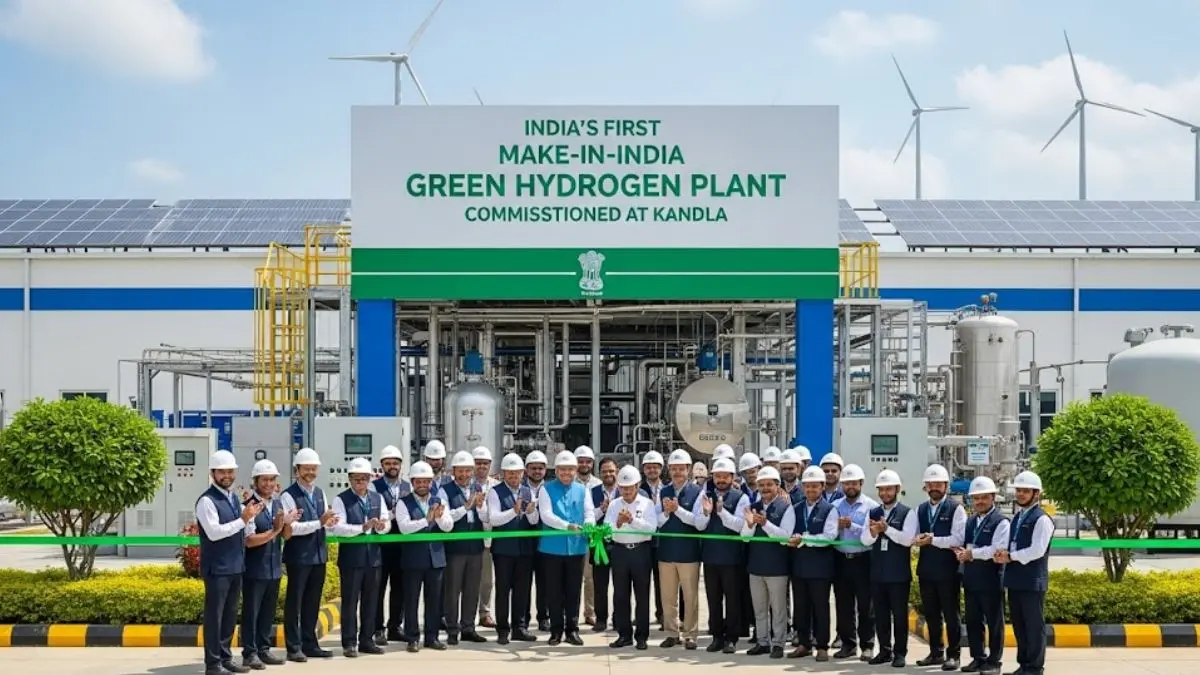
The next energy race has already begun
For more than a century, the global order was shaped by control over oil and gas. Countries with fossil fuel resources wielded influence, wealth, and strategic leverage. Those without them remained dependent.
Today, the energy system is entering a historic transition. Climate change, technology, and geopolitics are accelerating the search for alternatives. Among these, hydrogen—especially green hydrogen produced using renewable energy—is emerging as a potential cornerstone of the future.
India’s National Green Hydrogen Mission represents a recognition that the next phase of global power may be defined not by oil wells, but by clean energy ecosystems.
The ambition is not modest. India aims not only to reduce dependence on fossil fuels but to become a global hub for green hydrogen production, export, and technology.
Why hydrogen matters
Hydrogen has long been used in refining, fertilisers, and chemicals. However, traditional hydrogen production relies on fossil fuels. Green hydrogen changes the equation.
Produced through electrolysis powered by renewable energy, it emits no carbon. It can be stored, transported, and used across industries that are difficult to decarbonise.
These include:
Steel
Cement
Shipping
Aviation
Heavy transport
For sectors where electrification is challenging, hydrogen offers a viable pathway.
India’s strategic advantage
India possesses several structural strengths in this emerging field. Abundant solar and wind resources provide the foundation for low-cost renewable energy. Large domestic demand in fertilisers and refining creates early markets.
The country’s experience in scaling digital and energy infrastructure also enhances execution capability.
If costs decline as expected, India could produce green hydrogen competitively, positioning itself as an exporter to energy-importing regions such as Europe and Japan.
This could redefine trade patterns.
The industrial transformation
The hydrogen mission is not merely an environmental initiative. It is an industrial strategy.
Electrolysers, storage systems, fuel cells, and supply chains represent new manufacturing opportunities. Domestic production could generate employment, innovation, and export capacity.
This aligns with India’s broader goal of strengthening manufacturing and reducing technological dependence.
Over time, hydrogen clusters could become centres of economic activity.
The geopolitical dimension
Energy transitions reshape global alliances. As fossil fuel dependence declines, new partnerships emerge.
Countries rich in renewable resources gain influence. Importing nations seek reliable suppliers.
India’s hydrogen ambitions could strengthen ties with Europe, the Middle East, and East Asia.
It could also alter regional dynamics by reducing energy vulnerability.
In a multipolar world, energy security remains central.
The financial and technological challenge
Despite its promise, green hydrogen faces obstacles. Costs remain high. Infrastructure is limited. Storage and transport technologies are evolving.
Massive investment and policy support will be required.
The transition will take decades.
But early movers could shape standards, supply chains, and markets.
The environmental and social impact
The mission also offers environmental benefits. Reduced emissions, improved air quality, and sustainable growth are key outcomes.
However, large renewable projects raise land, water, and ecological concerns. Balancing sustainability with development will be essential.
Inclusive growth must remain a priority.
The innovation ecosystem
Research and development will determine long-term competitiveness. Universities, startups, and industry must collaborate.
Hydrogen technologies evolve rapidly. Continuous innovation will be required.
This creates opportunities for entrepreneurs and researchers.
The link to future talent and education
The success of the hydrogen economy depends on skilled engineers, scientists, and technicians.
Energy, technology, and talent are deeply interconnected.
Risks and uncertainties
Market demand, global competition, and policy stability will shape outcomes.
Other countries are also investing heavily.
India must avoid fragmented execution.
Long-term vision and coordination are critical.
The long-term vision
If successful, India’s hydrogen strategy could achieve multiple goals:
Energy independence
Industrial growth
Climate leadership
Geopolitical influence
It could also position India at the centre of a new global energy architecture.
A defining transition
The shift to green hydrogen represents more than technological change. It reflects a broader transformation in how economies generate power, wealth, and influence.
The next energy superpowers may not be those with fossil fuel reserves, but those with renewable ecosystems, technology, and scale.
India’s bet on hydrogen is therefore a bet on the future itself.
The outcome will not be immediate. But its consequences could last generations.
Manish Kumar is an independent education and career writer who focuses on simplifying complex academic, policy, and career-related topics for Indian students.
Through Explain It Clearly, he explores career decision-making, education reform, entrance exams, and emerging opportunities beyond conventional paths—helping students and parents make informed, pressure-free decisions grounded in long-term thinking.
Comments
Post a Comment